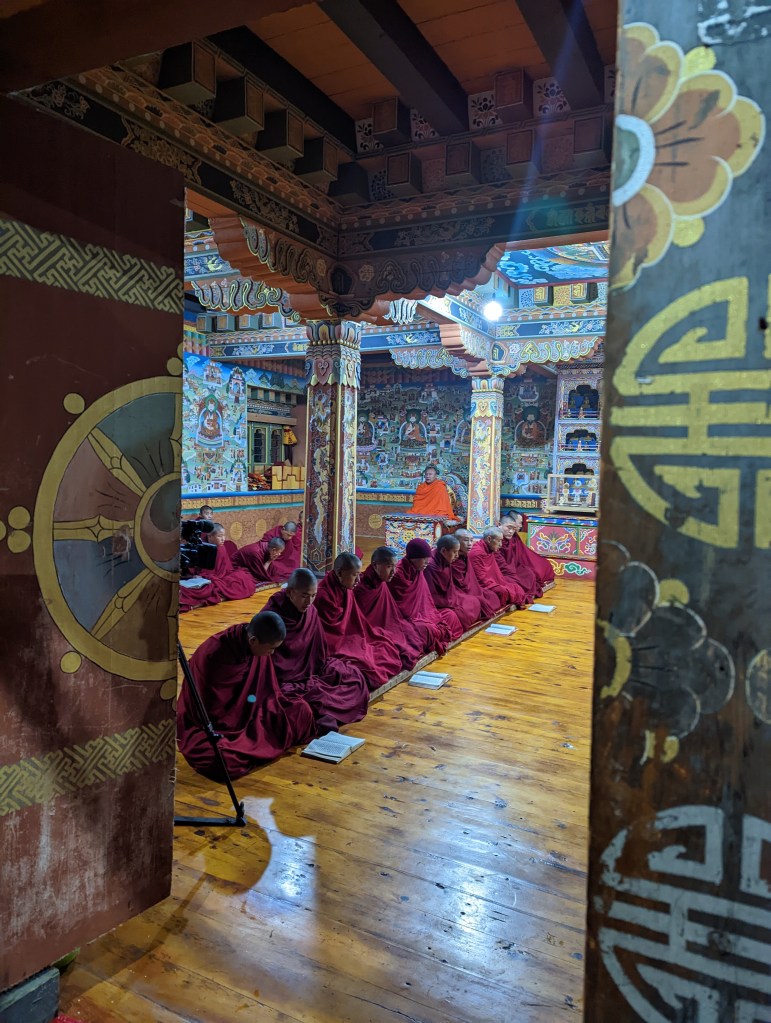
The monks at the Gasa Dzong were chanting as we arrived at the start line. They prayed and wished for good weather and for our safety. The gods must have been listening because the rain stopped and the weather cleared after nearly a week of rain. We sat under a large, colorful canopy as a procession moved through, blessing the start of the race as well as everyone involved. One by one, our names were called and we made our way to the official startline.
Day one was supposed to be approximately 25 miles with 10,000 feet of climbing. I wanted to be conservative on that day in order to save my energy for the following four days. My strategy going into multi-day efforts is always to go out easy and ramp it up at the end. I gave myself permission to hike the majority of the uphill and run what I could of the rest. “Run the runnable and walk the rest,” I tell myself.
I always feel like race starts are abrupt and jarring. They almost seem to sneak up on me even through the days and weeks of anticipation. With the pop of a gun, I pressed start on my COROS Vertix 2 watch and started jogging out with the rest of the athletes.
The first 20 km was on a dirt road. I held back, even though everyone else was surging ahead. Day 1 was not the day to blow up. At the end of the road, the route narrows into a muddy, rocky trail churned up by the hooves of many pack horses. The thing about the Snowman route is that it isn’t on a manicured or maintained trail, rather, it traverses a route that has been used for generations to move pack animals. The trail is muddy, braided and often steep, favoring more direct lines rather than easier switchbacks.
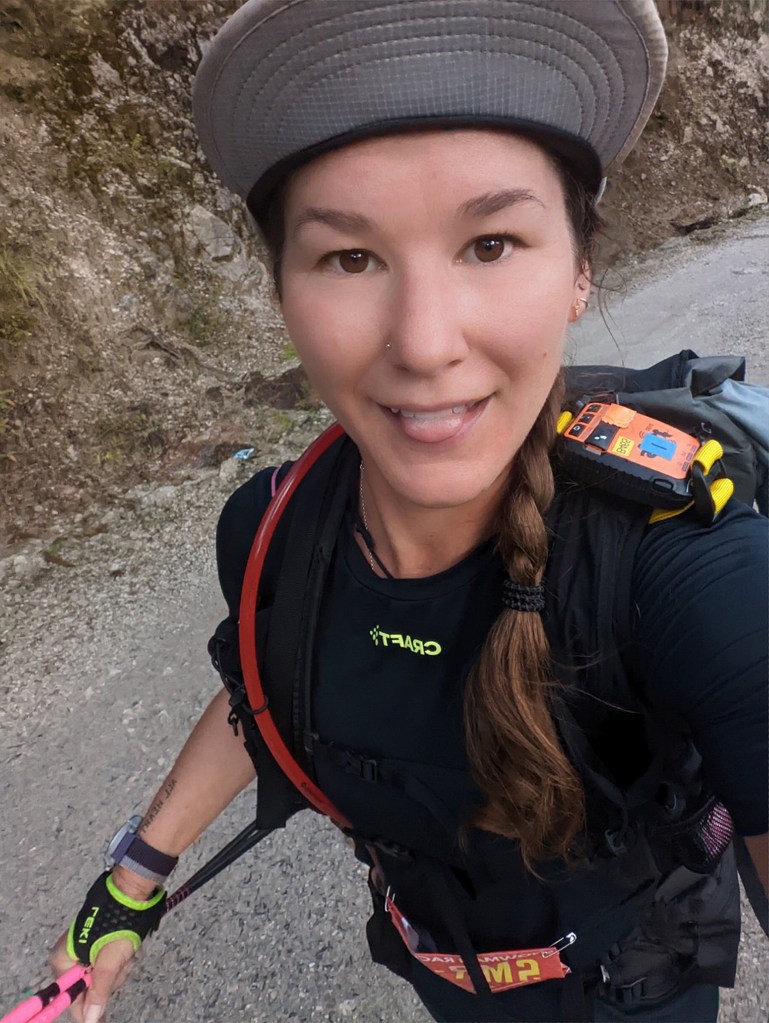
I find my happy place when the terrain turns rough. I smiled and laughed as I skipped over rocks and splashed through the mud (trying to ignore the fact that there was an abundance of horse manure mixed in), passing one runner in the first section of mud and rock. Not long after, I came upon another runner. His breathing was labored and he stopped to catch his breath every 10-15 paces. I chatted with him for a few minutes and decided that I didn’t feel right leaving him behind, so I walked with him to the Army checkpoint at a wide glacial valley called Rodophu. I could see more runners ahead of us going up the pass and thought I could catch up with them, but I stayed with the distraught runner until he decided to drop from the race. I pushed on leaving him with the Royal Bhutanese Army, confident that they would take care of him.
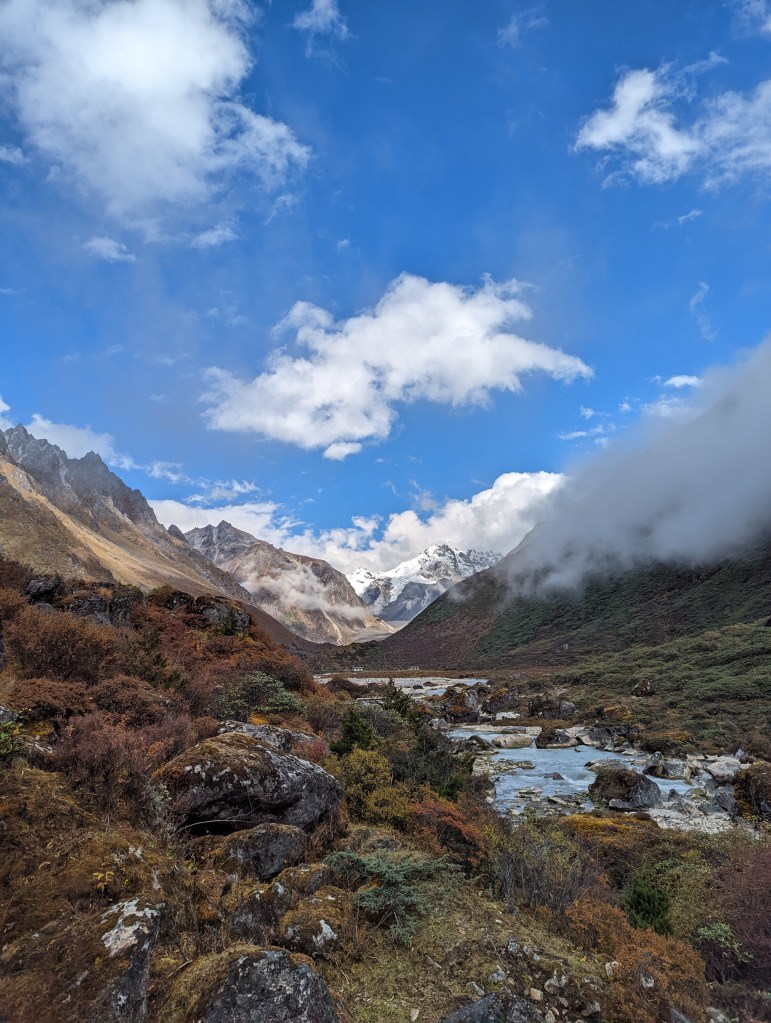
Now in last place, I started up the pass. The temperature dropped significantly and clouds began to move into the high mountains. I was nearing the elevation of 15,000 feet, and while I felt okay mentally and physically, my pace began to slow. I realized that I hadn’t fueled well throughout the day and I was probably dehydrated and behind on calories. I’ve never been very good at fueling during races or FKTs, so I always have Gnarly Nutrition Fuel2O mixed in my water. It’s helped me bounce back from many bonks, so I drank it down.
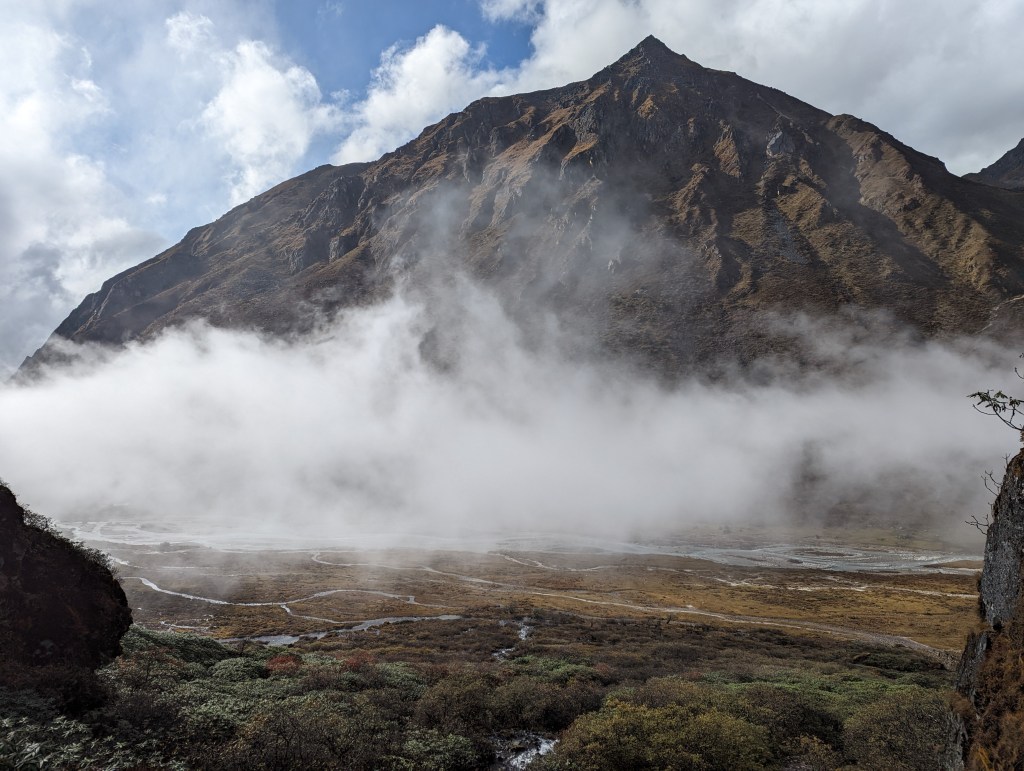
I reached the top of the pass as darkness fell. A soldier tailed behind me and another soldier was waiting at the top of the pass. They followed me as I navigated in the purple, mud-caked night. Graupel started falling sideways across the light of my headlamp, making me feel a little off-balance. At some point I passed one of the runners, who had his own soldier following him. The runner looked exhausted and I wondered if I looked the same.
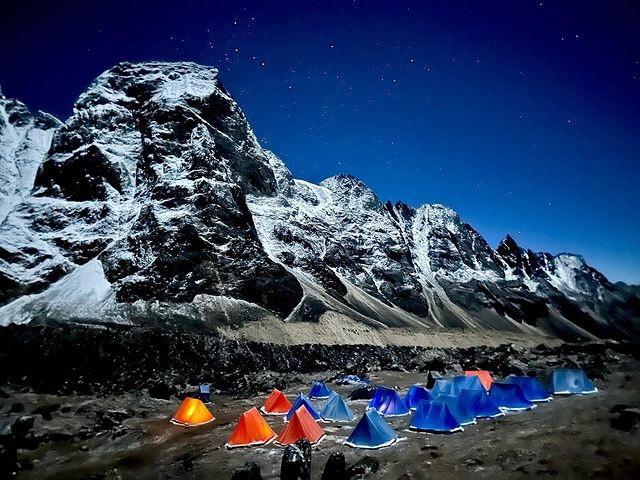
Eventually, I made it to Camp one at an elevation of approximately 16,000 feet, a place called Narithang. The first day had ended up being three miles longer than originally expected. I paused my COROS Vertix 2 watch, which read out 27.99 miles. It was a long day but I didn’t feel particularly overexerted – I’m quite used to very long days in the mountains so I didn’t think much of it.
I was greeted warmly by Bryon Powell and taken to the doctor’s tent for a compulsory medical check. My pulse-ox was hovering around 95% and I felt good overall. I was cleared to run the next day. I drank some warm water and had a couple of snacks in the dining tent while someone fetched my drop bag, then I took my Peak Refuel dinner to bed with me and ate as I began to warm up in my cozy Feathered Friends sleeping bag.
A few minutes later, Bryon was at the door to the tent. As one of the last finishers of the day, I was being reminded that if I didn’t make the cutoffs for the following days that I would have to stay at the camp until the camp hiked out, which could be up to 8 days. That made me nervous, especially with my limited gear… and I’d miss my flight home.
I decided to sleep on it.
I woke up before my 4 o’clock alarm the following morning. I was thinking that I’d go ahead with the race, but gave myself permission to turn around if I wasn’t moving fast enough. The morning was hectic with everyone preparing for the day. I packed my Six Moon Designs bag and dressed for the sub-freezing temps.
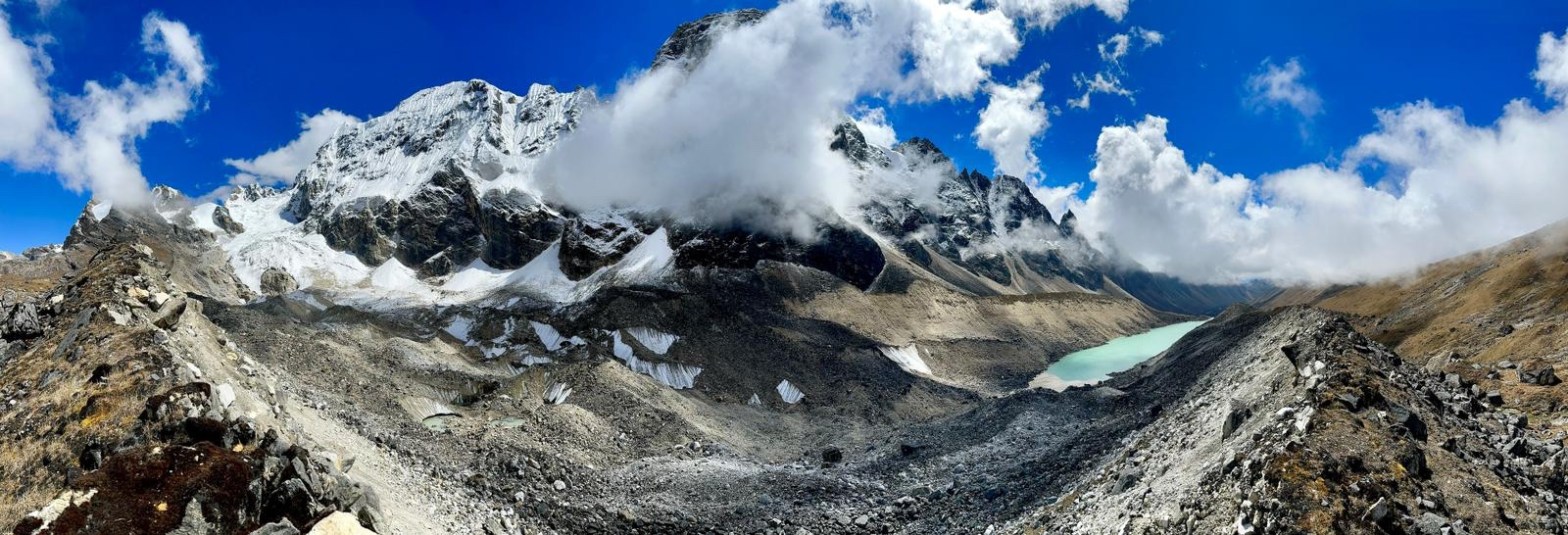
I exited the tent and was immediately transfixed by the view before me. When I had arrived the night before, the mountains surrounding Narithang had been cloaked by clouds and darkness. In front of me stood vertical cliff faces reaching ever upwards, touching the roof of the azure sky with their icy eminence. The peaks were skirted by crevassed and calving glaciers. A giant glacial moraine lined one side of the valley below, a sure sign that the peaks’ icy skirt was once much larger.

I had decided to go ahead with the day, and gave myself permission to turn around if I wasn’t moving fast enough. I told Bryan my plan, and he was comfortable with it as long as I didn’t get too far into the day before deciding to turn around. I know my own limitations and I can set my ego aside, so I knew I wouldn’t make a risky decision.
We started promptly at 6am with a short, steep climb, then rolling terrain through a basin until we got to a longer climb to a pass at about 17k feet. I felt good overall, but my legs were heavy and I felt like I was moving in slow motion. Probably a product of my lack of nutrition the day before. I kept an eye on my Coros, setting the screen to show my average pace. The rest of day two would be mostly downhill – I could manage that easily – but day three would be over 20 miles of climbing up to nearly 18,000 feet. In order to make it through day three within the cutoff, I’d have to average 37 minutes per mile.
My pace up to the pass was closer to 42 minutes per mile.
My heart fell. I knew I would be turning around at the top of the pass.

Fellow athlete and friend, Emily Keddie, was waiting for me at the crest. She cried with me as I talked through my decision. I wanted nothing more than to finish this race. I had gone into it with an all-or-nothing mindset. In the weeks leading up to the race, I had said that I would only quit for medical reasons or if I was pulled from the race. I was expecting this race to be the hardest thing I’d ever done. I expected to push well beyond my limits.
Instead, I willingly withdrew from the race while I was still in good physical and mental condition. Why? Am I scared? Am I not tough enough? I wasn’t scared; I actually felt quite comfortable out there. And I was certainly tough enough; I had done plenty of things that required high levels of suffering.
Angry tears burned tracks down my face. I felt like I was letting down my sponsors, my family, and my friends. The expectations that I placed upon myself were high, and I felt that others’ expectations of me were of a similar level. I let those perceived expectations rule over me. I felt ashamed and embarrassed. I cried as I walked back to Narithang with two other athletes who had dropped at the same time. There were cheers along with jingling bells as we approached the camp. We were welcomed with warm food and warm drinks. My embarrassment deepened. “I shouldn’t be here,” I thought to myself, “I should be out there.”
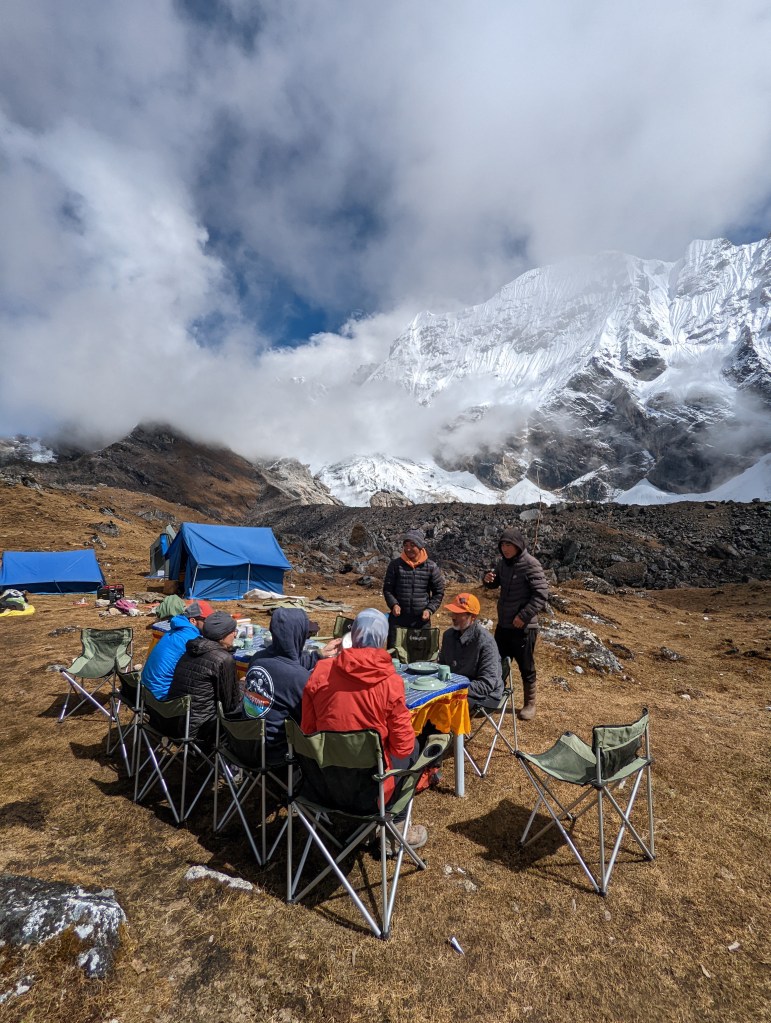
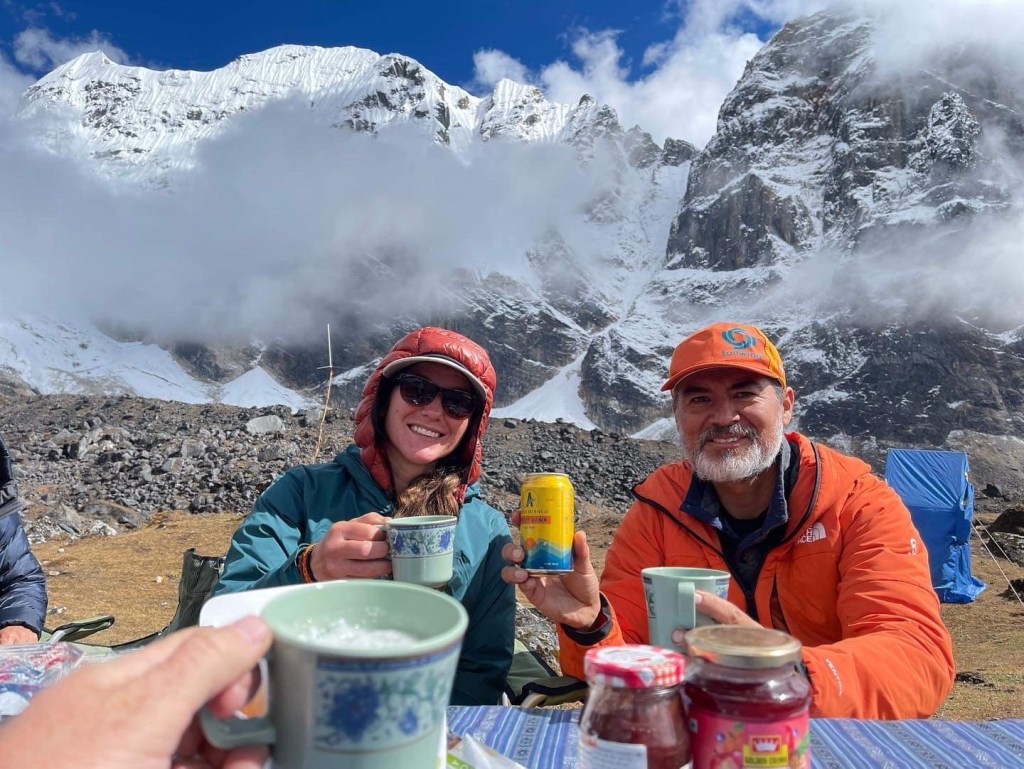
I was sitting in a chair in the sun and staring at the pass where I turned around, when Ian Sharman emerged from his tent and sat in the chair next to me. He had also DNF’d after completing day 1 due to complications with the altitude. This is a man with a high level of competency at altitude. I asked how he was feeling about his DNF, and I was impressed by his down-to-earth perspective. The message I got from him was basically this: DNF’s happen. It doesn’t determine who you are as an athlete as long as you learn from your mistakes.
I sat with that for a while as I soaked in the mountains around me. 19,000+ foot peaks towered above the glacial creek and massive moraine. I breathed deeply, reveling in the fact that I felt so good at 16,000 feet. Even though I didn’t finish the race, the thought still crossed my mind that I’m meant to be here, high up in the mountains. After an al fresco lunch, I explored the surrounding area, took photos of plants, and meditated on a rock in the sun. I knew I’d have to take some time to integrate the experience and my DNF, but for now, I was going to enjoy the scenery at a more leisurely pace and cheer on the other athletes as best I could.
 Women of the Wild